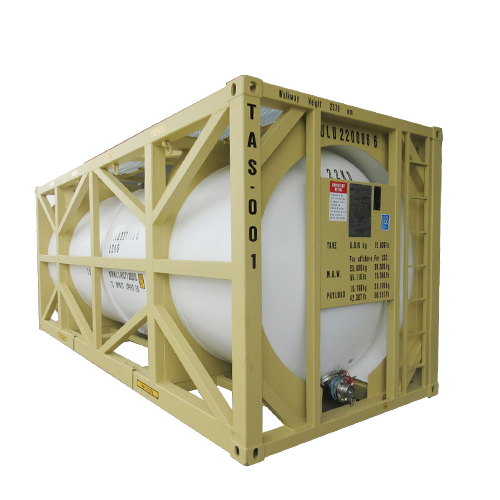
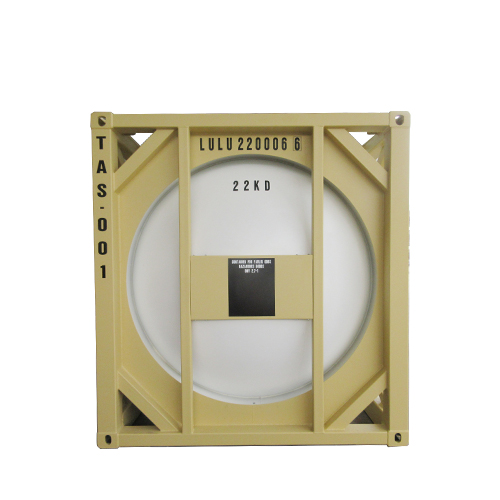
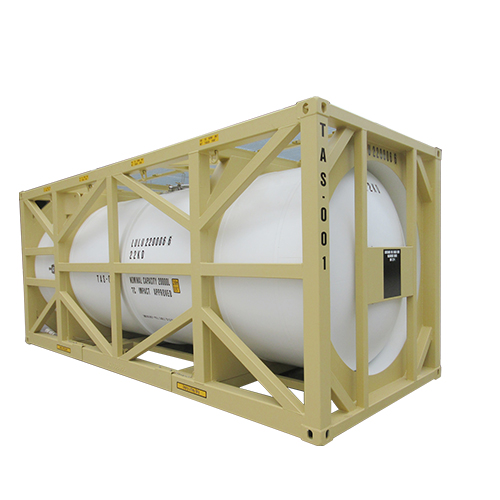
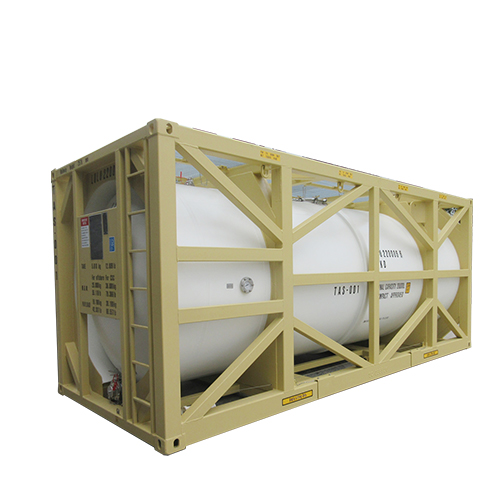
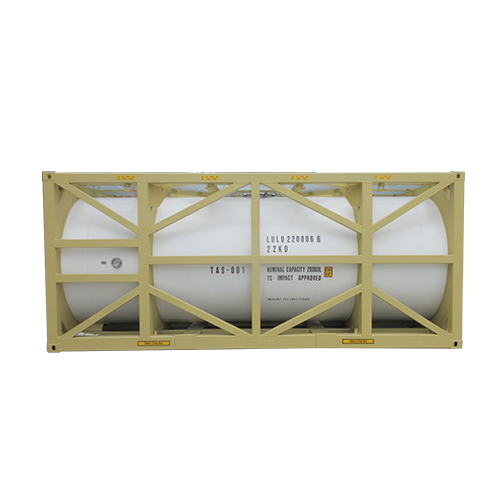

Corner Casting: SCW480
Shell:SS304
Welding Technique: Automatic TIG welding (Tungsten Inert Gas arc Welding)
Surface treatment: Painted or Galvanized
Special for transportation and storage of offshore freight
Meeting DNV 2.7-1 & ISO10855 standard.
Classification Society:BV, LR, DNV certified
Design Temperature: -20°c


Do you think a shipping container is just a sturdy steel box? Before it can officially start work, every single one must endure a series of tests that could only be described as "ordeals." Only by passing these trials is it deemed fit to carry your cargo across the oceans. Today, we reveal the 5 core "trials" that determine a container's destiny.
Trial 1: Longitudinal "Tug-of-War" – Testing Impact Resistance
Purpose: To simulate the extreme longitudinal forces and impacts a container experiences when lashed on a ship's deck in heavy seas, or during the jerks of train coupling and braking on railways. The goal is to ensure the structure doesnt fail or break free from its lashings.
Method:
The container is loaded with a uniformly distributed test load equal to its maximum rated gross weight.
Two bottom corner castings at one end of the container are rigidly fixed to the test bed.
A horizontal force equal to twice the rated corner casting force is simultaneously applied to the two bottom corner castings at the opposite end. The test is conducted in both directions – first by "pushing" and then by "pulling."
In Plain Language: This is a brutal "tug-of-war" for the container. It ensures that the longitudinal structure is strong enough to withstand violent rolling in storms and the sudden starts and stops of trains, preventing deformation or detachment that could cause a chain collapse of stacked containers.
Trial 2: Front/Rear "Shield Bash" – Testing End Wall Strength
Purpose: To verify that the end walls at both ends of the container can resist the lateral pressure from cargo inside, preventing the cargo from bursting through the walls due to shifting during transit.
Method: A uniformly distributed load equivalent to 0.4 times the rated internal cargo lateral pressure is applied to the end wall from inside the container. If the end wall structures at both ends are asymmetrical, each end must be tested separately – no "favoritism" is allowed.
In Plain Language: The end walls are the container's "chest and back." Especially when loading bulk or heavy cargo, the jostling of transit causes constant impacts against the end walls. This test simulates such impacts, ensuring the end walls act like sturdy shields, firmly withstanding the cargo's internal "force."
Trial 3: Side "Iron Shirt" – Testing Side Wall Strength
Purpose: Similar to the end wall test, but for the larger and more stressed side walls. It examines their ability to resist pressure from internal cargo and external forces during stacking.
Method: From inside the container, a uniform load larger than that for end walls – 0.6 times the rated lateral pressure – is applied to the side walls. If the side wall designs differ, both left and right sides must independently pass the test.
In Plain Language: Side walls are the container's largest and most vulnerable panels, and they bear significant stress during stacking. This test applies even greater pressure than the end wall test, simulating extreme forces from the cargo. A substandard wall could "bulge" or even crack, leading to cargo damage.
Trial 4: Top "Impact" – Testing Roof Local Strength
Purpose: To verify the roof's strength against local impacts, such as accidental bumps from spreaders during lifting, workers stepping on it, or falling objects, preventing roof punctures and water ingress.
Method: A 300 kg mass is uniformly distributed over a 600mm x 300mm area (roughly the size of a desk) at the structurally weakest point of the roof. This test is only applicable to containers with rigid roofs.
In Plain Language: Imagine a heavy man standing on the roof, or a spreader beam accidentally pressing down on it during lifting. This test simulates such "single-point blows," ensuring the roof won't easily dent or crack even under sudden force, thereby protecting the cargo from the elements.
Trial 5: Floor "Tank Tread" – Testing Base Structure Durability
Purpose: To simulate the repeated and intense pressure and impacts from heavy forklifts and pallet jacks operating inside the container, verifying the base structure's load-bearing capacity and fatigue resistance.
Method:
The container is supported only by its four bottom corner castings.
A forklift or a simulated loading device, with specified wheel load, wheelbase (760mm), and wheel width (180mm), drives back and forth along different paths inside the container, covering as much of the floor area as possible.
The standard single-axle load is generally required to be no less than 71.22 kN (approx. 7.26 metric tons), and the contact area of each wheel is strictly limited to 142 cm² to simulate the high pressure of real tires.
In Plain Language: This is the "ultimate crushing test" for the container floor. It simulates the constant, heavy traffic of loaded forklifts maneuvering in and out. This ensures the floor structure can withstand long-term, high-intensity wheel pressure without breaking, sagging, or deforming, providing a stable foundation for all cargo.
These five "trials by ordeal" each correspond to a real risk a container might face during its long journey. An ordinary-looking steel box only earns its right to go global after surviving these rigorous and demanding tests.
